Direct answer
Start with the kind of flying you actually want.
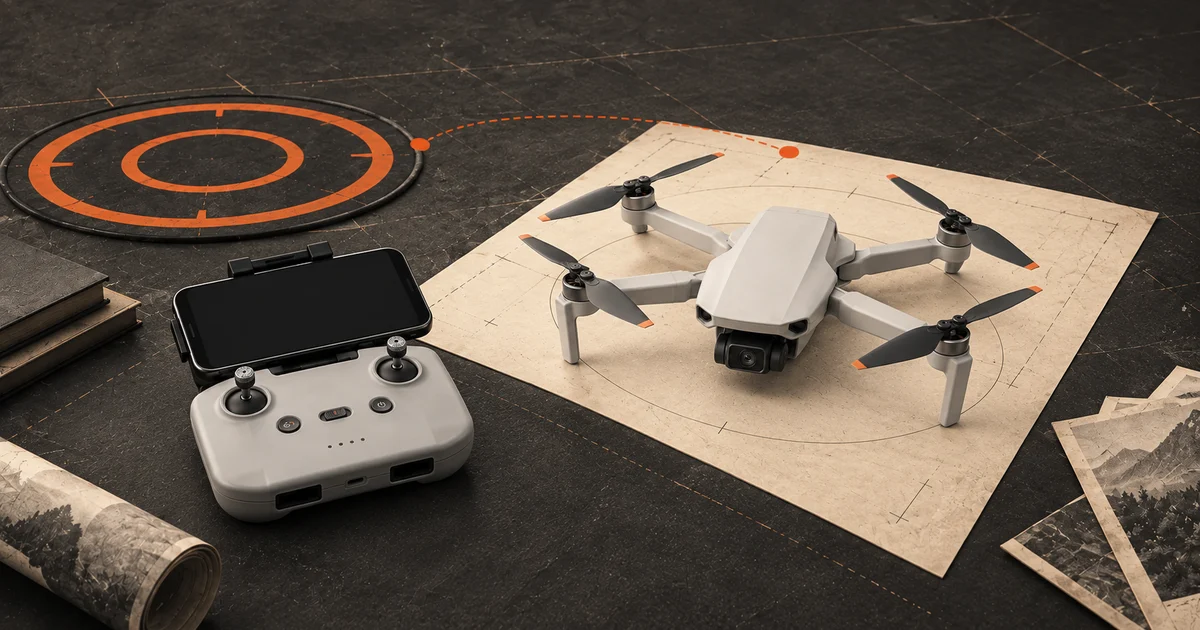
The DJI Mini 4K is the best default first camera drone because it teaches normal stick control, records stabilized 4K video, and avoids charging premium-drone money for a first experiment. Choose the DJI Neo for simple self-filming, the DJI Mini 5 Pro for a premium camera and obstacle sensing, or the Potensic Atom 2 when you want a non-DJI alternative with tracking. None of them makes trees, wires, weather, airspace, or poor judgment disappear.
Not sure which drone to buy?
DJI Mini 4K
Start here if you want to learn proper drone controls without paying for features you may never use.
DJI Neo
It can take off from your palm and film short clips with minimal setup. Think personal flying camera, rather than a traditional drone.
DJI Mini 5 Pro
It offers the most advanced camera and flight assistance here, but it is an expensive way to discover whether you enjoy flying.
Potensic Atom 2
It offers stabilized 4K video and subject tracking. You still need to watch for obstacles yourself and check the exact US kit.
| Model | Best for | Documented camera | Claimed max flight time | Main drawback |
|---|---|---|---|---|
| DJI Mini 4K | Learning a traditional camera drone | 12MP, 4K/30fps, 3-axis gimbal | 31 minutes | No obstacle avoidance or subject tracking |
| DJI Neo | Quick self-filming and palm launch | 12MP, 4K/30fps, 1-axis gimbal plus electronic stabilization | 18 minutes | Shorter flights and no obstacle avoidance |
| DJI Mini 5 Pro | Premium compact camera work | 50MP 1-inch sensor, up to 4K/120fps, 3-axis gimbal | 36 minutes with the standard battery | High cost, weight and US retail questions |
| Potensic Atom 2 | A non-DJI camera drone with tracking | 48MP 1/2-inch sensor, 4K/30fps, 3-axis gimbal | 32 minutes | No obstacle avoidance; check US kit stock |
The flight-time numbers above are manufacturer maximums measured under controlled conditions. They are useful for comparing batteries, but they are not a safe plan for staying airborne until the final minute.
DJI Mini 4K: a great place to start
Picture a first trip to the beach: you want a steady overhead view, but you also want to spend the afternoon learning to steer. The Mini 4K’s GPS-assisted hover and stabilized 4K camera give you room to practice framing instead of constantly correcting a drifting shot. Its dedicated controller teaches the two-stick pattern you can use on more advanced camera drones.
It folds into a small bag and includes Return to Home, but it has no subject tracking or forward, rear, or side obstacle sensing. The downward sensor helps the drone hold position and land; it will not spot the tree ahead. You still need to watch the aircraft and leave room to stop.
First-flight tip: Start in a large open area, well away from trees and people. Practice taking off, hovering, moving a short distance, and landing before trying a scenic tracking shot.
The DJI Mini 4K review goes deeper on the controller, camera limits, and package choice if this is your likely first aircraft.
Main tradeoff: good value and a proper camera-drone experience, but no obstacle avoidance and a modest 1/2.3-inch camera sensor.
DJI Neo: the easiest way to make a quick flying clip
If your real goal is a short clip of yourself on a hike, the Neo is easier to take along than a full camera-drone kit. It can launch from your palm and run automated shots without a separate controller in its basic use case. Its covered propellers and 135 g body make the setup feel more approachable in a suitable open space.
That simplicity does not make it the best teacher for every pilot. Phone or palm control is not the same as learning a conventional remote. The 18-minute claimed maximum is much shorter than the camera drones here, and DJI explicitly says the Neo does not support obstacle avoidance.
First-flight tip: Try one simple automated shot in a clear, open area and watch the whole route, including the return. If you want to learn deliberate framing with sticks, choose the Mini 4K instead.
Main tradeoff: exceptionally approachable for short automated clips, but limited battery endurance and less room to grow as a camera platform.
DJI Mini 5 Pro: the premium beginner choice
The Mini 5 Pro makes more sense when your first drone is already part of a serious photo or video plan. Its 1-inch sensor, 10-bit recording options, and true vertical framing give you more creative room than the Mini 4K, especially when the light is difficult or you need portrait clips.
Subject tracking and omnidirectional sensing can help with moving shots, but they do not make a wooded trail a safe automatic route. Fine branches, wires, low-contrast objects, bad weather, and an unsuitable Return to Home path remain pilot problems.
Before-buy tip: Check the exact aircraft-and-battery weight and the seller’s regional warranty path. DJI lists 249.9 g with the standard battery and says actual weight can vary; direct official US availability was not confirmed at the last source check.
Main tradeoff: the most capable compact camera drone in this shortlist, but too expensive for a casual experiment and not a guaranteed sub-250 g result in every configuration.
Read the full DJI Mini 5 Pro review for the camera, weight, controller, availability, and upgrade decision in more detail.
Potensic Atom 2: a non-DJI path with tracking
If you want a camera drone outside DJI’s ecosystem, the Atom 2 is a practical candidate. Potensic lists a 1/2-inch sensor, 48MP photos, 4K/30fps video, subject tracking, and a three-axis gimbal. That gives you more automated filming options than the Mini 4K, though it does not automatically make a shot safer.
The important omission is obstacle avoidance. Tracking a person on an open beach is one thing; following them between trees is another. Keep the route clear, remain within sight, and learn manual control before trying follow modes.
Potensic claims up to 32 minutes per battery under controlled conditions. Its direct store displayed the starting kit as unavailable at the September 30 check, while B&H listed a three-battery Fly More Combo. Compare the exact controller, batteries, price, and return terms before treating either listing as the same offer. The smaller support ecosystem and lack of obstacle avoidance are the real tradeoffs against DJI.
First-flight tip: Use a clear field for manual practice. Before relying on Return to Home, check the home point and scan the route it would take back.
Main tradeoff: tracking and stabilized 4K video without DJI, but no obstacle avoidance and a smaller independent support ecosystem.
Three mistakes when buying a first drone
Buying the aircraft without a practical battery plan
One battery may give you only a short practice session after setup, takeoff, and a safe landing reserve. An extra battery can make more sense than an expensive feature bundle, but check the total kit, charger, and whether a larger battery changes the aircraft’s takeoff weight.
If $500 is your hard ceiling, use the complete-kit budget comparison before spending the remainder on accessories.
Treating advertised flight time as a schedule
The comparison table shows manufacturer maximums under controlled conditions. Wind, maneuvers, filming, and the return trip use power. Plan your first flights to land early, with enough battery left for an unexpected delay.
Assuming sensors prevent every collision
The Mini 4K, Neo, and Atom 2 do not offer obstacle avoidance for the route ahead. The Mini 5 Pro has more sensing, but thin branches and wires can still be missed. Practice in open space and keep the drone where you can see it instead of treating a sensor badge as permission to fly close to obstacles.
Before the first flight
In the United States, check the current recreational rules before you launch: some flights require registration or airspace authorization, and you must keep the drone in sight. Our US drone rules guide explains the beginner decisions, including TRUST and Remote ID, in plain language.
Read the manual for your exact aircraft and controller. Then use the preflight checklist in a large open area: check wind and battery, confirm the Home Point and Return to Home behavior, and begin with short takeoff, hover, movement, and landing exercises.
The best first drone is the one that still leaves enough budget and attention for safe practice.
Mini 4K or Atom 2 for your first kit?
Our DJI Mini 4K vs Potensic Atom 2 comparison separates lower-cost manual filming from subject tracking and a richer camera workflow. Compare matching complete kits before choosing between them.
Sources
Sources behind the shortlist
These official specifications and independent reviews support the shortlist and its limitations. Manufacturer flight-time and range figures are controlled-condition maximums, not promises for a normal flight.
- DJI Mini 4K specifications (on DJI's shared Mini 4K / Mini 2 SE page), DJI. Manufacturer source. Checked . This official page covers both models at a shared URL; the 4K video and controller rows explicitly identify the Mini 4K.https://www.dji.com/mini-2-se/specs
- A beginner's guide to DJI Mini 2 SE and DJI Mini 4K, DJI. Manufacturer source. Checked . Used for the official beginner feature comparison and product limitations.https://repair.dji.com/help/content?customId=01700007462&lang=en&paperDocType=ARTICLE&re=US&spaceId=17
- DJI Mini 4K review - your best first drone, TechRadar. Independent source. Checked . Used for an independent view of value, flight behavior, camera output, and missing obstacle sensing.https://www.techradar.com/cameras/drones/dji-mini-4k-review
- DJI Mini 4K review, Digital Camera World. Independent source. Checked . Used as a second independent view of the beginner experience and camera tradeoffs.https://www.digitalcameraworld.com/reviews/dji-mini-4k-review
- DJI Neo specifications and support, DJI. Manufacturer source. Checked . Used for weight, camera, flight-time, control, and propeller-guard details.https://www.dji.com/support/product/neo
- DJI Neo product page, DJI. Manufacturer source. Checked . Used for palm-control features and the explicit absence of obstacle avoidance.https://www.dji.com/neo
- DJI Mini 5 Pro user manual, DJI. Manufacturer source. Checked . Used for weight, camera, battery, sensing, and controller details; the US specifications page is not consistently available.https://dl.djicdn.com/downloads/DJI_Mini_5_Pro/UM/20251210/DJI_Mini_5_Pro_User_Manual_en.pdf
- DJI Mini 5 Pro review, TechRadar. Independent source. Checked . Used for the premium-beginner verdict, image quality, weight uncertainty, and US availability context.https://www.techradar.com/cameras/drones/dji-mini-5-pro-review
- Potensic Atom 2 official store listing, Potensic. Manufacturer source. Checked . Used for camera, tracking, package choices, and the official store's current unavailable status.https://store.potensic.com/products/atom-2
- Potensic Atom 2 product information, Potensic. Manufacturer source. Checked . Used for the claimed 32-minute maximum flight time and camera modes.https://www.potensic.com/atom-2.html
- Potensic Atom 2 Fly More Combo at B&H, B&H Photo Video. Operator source. Checked . US retailer listing for the three-battery kit; price and stock can change.https://www.bhphotovideo.com/c/product/1884976-REG/potensic_apm2530221_atom_2_fly_more.html
- Potensic Atom 2 review, TechRadar. Independent source. Checked . Used for an independent view of image quality, tracking, software, and missing obstacle sensing.https://www.techradar.com/cameras/drones/potensic-atom-2-review
- Best drones for beginners, Digital Camera World. Independent source. Checked . Used to compare the structure and selection logic of a current beginner shortlist.https://www.digitalcameraworld.com/buying-guides/the-best-drones-for-beginners
Editorial disclosure: This shortlist combines current manufacturer documentation with several independent reviews. DroneReviewed is not claiming original flight tests. Prices, stock, firmware, package contents, and regional support can change, so verify the exact configuration before buying.