The creative decision
Do you actually need two cameras?
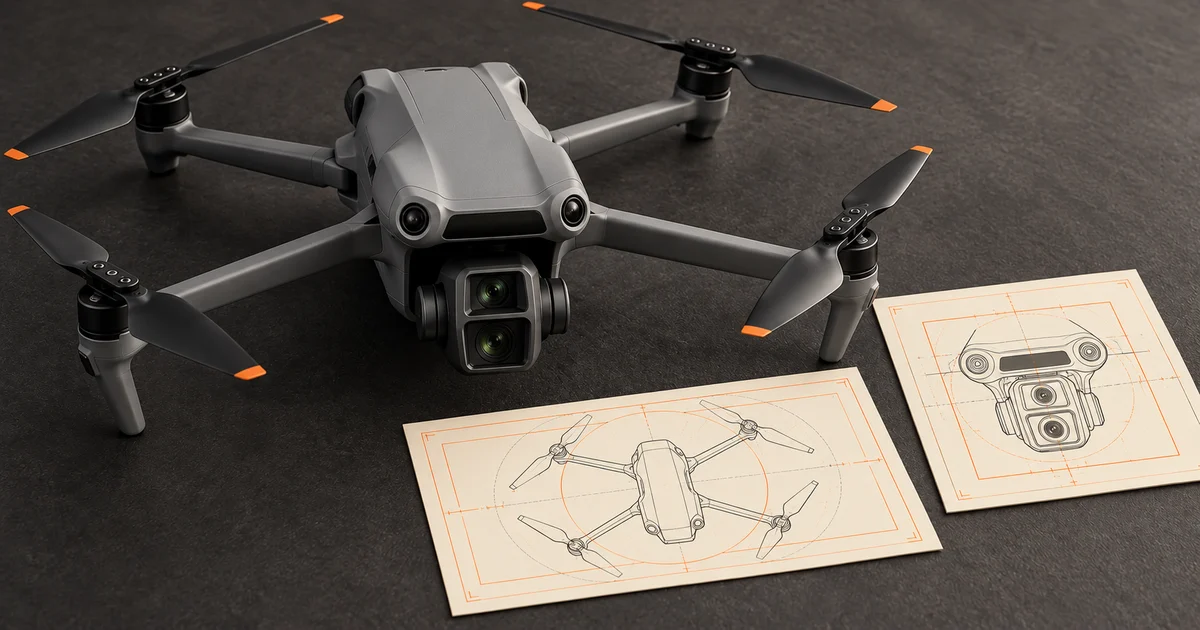
Most camera drones show the world from one wide viewpoint. The Air 3S carries a second physical camera that can turn the same location into a different shot: the 24 mm-equivalent view establishes the whole scene, while the 70 mm-equivalent view isolates a subject and makes distant layers feel closer together. That creative choice is the reason to carry a larger aircraft. The advertised 9x zoom matters far less because everything beyond the native tele camera is a digital crop. Air 3 owners should upgrade only when the larger main sensor, low-light sensing, or extra storage solves a real problem.
Current eBay listings
DJI Air 3S
As an eBay Partner, DroneReviewed may earn a commission if you buy through these links.
Prices and availability can change.
The useful version
What the second camera changes
Creative advantages
- The wide and medium-tele cameras produce genuinely different compositions, so the second lens changes where the drone can stand rather than merely enlarging pixels.
- The 1-inch main sensor gives the wide camera more room in difficult light, while both cameras can record compatible 10-bit profiles.
- Long claimed endurance, 42 GB of internal storage, omnidirectional sensing, and forward LiDAR make the system forgiving for planned camera work.
The tradeoffs behind the shot
- At 724 g, this is a noticeably larger system to carry, launch, and manage than a Mini. The extra camera capability is useful only if the aircraft still leaves the bag.
- The two cameras do not match perfectly: they use different sensor sizes and apertures, so exposure and image character can need attention when cutting between them.
- DJI's zoom scale extends to 9x, but only the move from the wide camera to the 70 mm-equivalent camera is a true change of lens. Higher steps crop digitally.
Why the second camera changes everything
The Air 3S is often described as a drone with zoom. That shorthand hides the important part. It has two physical cameras: a 24 mm-equivalent wide camera and a 70 mm-equivalent medium telephoto camera. Switching to 70 mm does more than make the subject larger. It narrows the view, compresses distance, and lets the pilot frame a building, mountain layer, vehicle, or person without pushing the aircraft as close.
That can change both the look of the footage and the route. A wide camera exaggerates the space between foreground and background. The medium tele camera makes those layers feel closer together. For a creator who recognizes that difference and plans around it, the second camera is not a checklist feature. It is the main reason to buy the Air 3S.
Use foreground, sky, and surrounding landscape to establish where the subject is.
Narrow the frame and pull distant background layers visually closer to the subject.
This is an explanation of framing, not a pair of sample photographs or a precise lens simulation. The point is the change in composition: one camera gives context, the other gives emphasis.
The cameras are not identical twins. The wide camera has a larger 1-inch sensor and brighter lens. The tele camera uses a smaller 1/1.3-inch sensor and a different aperture. Both can produce strong footage, but a careful editor may still need to balance exposure, noise, and texture when cutting between them.
The camera-drone guide starts with the shot you need and shows when a single-camera Mini is the simpler answer.
Choosing between this dual-camera kit and a smaller travel drone? The Mini 5 Pro vs Air 3S comparison puts the telephoto camera beside true vertical video, carrying weight and the complete package.
The 9x zoom claim needs translation
DJI presents a continuous-looking zoom range, but the hardware does not contain nine optical steps. The real optical change happens when the system moves from the wide camera to the 70 mm-equivalent camera, roughly a 3x field of view. Beyond that, the aircraft enlarges a crop from the tele camera.
Digital zoom can be useful for checking framing or producing a shot that will only be seen small. It does not create new lens detail. At the far end, atmosphere, vibration, focus, and cropping all become easier to see. The honest buying question is whether the 70 mm camera is useful, not whether a 9x label sounds impressive.
The same translation applies to 4K/120. It is a slow-motion mode, not the default choice for every scene. Normal 4K/60 or 4K/30 will be easier on storage, exposure, and editing for most work.
Bigger than a Mini for good and bad reasons
The 724 g body carries more battery, handles wind with more authority, and supports the two-camera payload. Independent reviewers consistently describe the aircraft as easy and predictable to fly. Forward LiDAR and omnidirectional vision add useful help, particularly when ambient light is weaker than basic vision systems prefer.
The weight also changes the experience before takeoff. It occupies more space, attracts more attention, and makes a larger commitment every time it leaves the bag. A feature-rich drone that stays at home is less useful than a smaller one the owner is willing to carry.
Sensing remains a backup. Thin wires, small branches, poor surfaces, moving obstacles, weather, and a bad Return to Home route are not solved by a sensor list. The Air 3S gives the pilot more information and more automated options, not permission to stop planning.
Air 3S vs Air 3: an upgrade, not a reset
| What changes | Air 3S | Air 3 |
|---|---|---|
| Wide camera | 1-inch, 50 MP | 1/1.3-inch, 48 MP |
| Medium tele camera | 1/1.3-inch, 48 MP | 1/1.3-inch, 48 MP |
| Internal storage | 42 GB | 8 GB |
| Low-light sensing | Omnidirectional vision plus forward LiDAR | Omnidirectional vision without forward LiDAR |
| Claimed maximum flight time | 45 minutes | 46 minutes |
The main-camera upgrade matters for difficult light and heavier editing. LiDAR and storage reduce friction. The tele camera, basic airframe idea, controller options, and overall two-camera workflow remain close. That is why independent reviews call the Air 3S excellent while still warning Air 3 owners against upgrading without a specific reason.
What the accessories do not fix
ND filters are useful when motion blur and a consistent shutter speed matter. They do not improve the sensor, rescue poor light, or make the two cameras match automatically. The split filter strengths are designed around the different lenses, which is another reminder that the cameras need deliberate handling rather than blind switching.
The same restraint applies to storage and batteries. More storage prevents an avoidable interruption; it does not improve a weak route or composition. More batteries create time to wait and repeat; they do not turn the 45-minute controlled-condition claim into 45 minutes of carefree filming.
Buy it for the lens, not the label
Is the Air 3S worth it?
Buy the Air 3S when the 70 mm-equivalent camera changes the shots you can make. It is a strong all-round camera drone because the second lens, larger main sensor, storage, endurance, and sensing solve practical production problems. Skip it if portability is the priority, if one wide camera is enough, or if the extra registration and kit size will keep the drone at home. Existing Air 3 owners should upgrade only for a specific need such as the larger main sensor, low-light sensing, or internal storage, not because the letter S promises a new experience.
SpecificationsWeight, camera, battery, controller and compatibility
Reference
Specifications
Checked for US
- Manufacturer
- DJISources DJI
- Model
- DJI Air 3SSources DJI
- Weight
- 724 g takeoff weight; Standard takeoff configurationCondition: US recreational operation requires registration at this weight; verify current rules and the final ready-to-fly configuration.Sources DJI, Federal Aviation Administration
- Camera
- Wide: 1-inch CMOS; medium tele: 1/1.3-inch CMOS; 50 MP; Both cameras up to 4K/120fps slow motion and 4K/60fps standard recording; 3-axis mechanical gimbalSources DJI, DJI
- Battery
- DJI Air 3S Intelligent Flight Battery; 4276 mAh; 62.5 Wh; manufacturer claim: 45 minCondition: The 45-minute figure is a manufacturer maximum measured under controlled conditions, not an expected usable flight time.Sources DJI
- Compatibility
- Controllers: DJI RC-N3, DJI RC 2; Batteries: DJI Air 3S Intelligent Flight Battery; Apps: DJI Fly; Requirements: FAA registration for US recreational operation, microSD card for extended recording, Current firmware and local operating rulesSources DJI, DJI, Federal Aviation Administration
- Support status
- current; Current product, specifications, support, and downloads pages were available when checked.Sources DJI, DJI
- Official US availability
- unavailable; DJI US Store displayed RC-N3 and Fly More Combo Lite RC 2 packages as Out of Stock on October 2, 2026. Third-party seller stock is separate.Sources DJI
Sources and editorial noteOfficial documentation and independent reviews
Sources
Where the facts came from
Manufacturer documentation was used for specifications. Independent reviews were used to understand the practical strengths and limitations.
- DJI Air 3S, DJI. Manufacturer source. Checked . Used for the current product, camera-system, sensing, storage, controller, and purchase claims published by DJI.https://www.dji.com/air-3s
- DJI Air 3S specifications, DJI. Manufacturer source. Checked . Used for weight, dual-camera, battery, storage, video, controller, and compatibility facts.https://www.dji.com/air-3s/specs
- DJI Air 3S downloads, DJI. Manufacturer source. Checked . Official home for current manuals, release notes, and support software.https://www.dji.com/air-3s/downloads
- DJI Air 3 specifications, DJI. Manufacturer source. Checked . Used for the Air 3S and Air 3 comparison.https://www.dji.com/air-3/specs
- Recreational Flyers & Community-Based Organizations, Federal Aviation Administration. Government source. Checked . Used for the current US recreational registration threshold and baseline operating requirements.https://www.faa.gov/uas/recreational_flyers
- DJI Air 3S review: soaring closer to camera-drone perfection, TechRadar. Independent source. Checked . Used for independent observations on the two-camera system, flight behavior, battery life, weight, and the limited upgrade from Air 3.https://www.techradar.com/cameras/drones/dji-air-3s-review
- DJI Air 3S review: The new gold standard for drones, Tom's Guide. Independent source. Checked . Used for independent observations on low-light output, telephoto use, tracking, storage, and registration.https://www.tomsguide.com/cameras-photography/drones/dji-air-3s-review
- DJI Air 3S review, Digital Camera World. Independent source. Checked . Used as an additional view of the camera system, telephoto framing, and value position below the Mavic line.https://www.digitalcameraworld.com/reviews/dji-air-3s-review
- DJI Air 3S US Store packages, DJI. Manufacturer source. Checked . United States/USD page showed RC-N3 and Fly More Combo Lite RC 2 options as Out of Stock. This is a dated direct-store observation, not a claim about all retailers.https://store.dji.com/product/dji-air-3s
- DJI Air 3S FAQ, DJI. Manufacturer source. Checked . Verified 2.7K/60fps vertical output on both cameras.https://www.dji.com/air-3s/faq
Editorial disclosure: This review combines current DJI documentation with several independent reviews. DroneReviewed is not claiming ownership, original flight tests, or measurements. Availability, firmware, package contents, and operating rules can change, so check the exact configuration before buying.