Direct answer
Mini for the bag. Air for the second camera.
- Mini 5 Pro: Buy it if portability and true vertical video matter most.
- Air 3S: Buy it if you regularly need both wide and 70 mm telephoto views.
Skip the larger Air kit if you rarely need the second camera. Before buying either model, confirm the exact US package, seller and support terms.
At a glance
What changes the decision
| What matters | DJI Mini 5 Pro | DJI Air 3S |
|---|---|---|
| Best for | Travel, a smaller bag and portrait-first video | Wide and tighter compositions on the same flight |
| Camera system | Single 1-inch camera; no separate telephoto camera | 24 mm-equivalent wide plus 70 mm-equivalent medium tele camera |
| Sensors | 1-inch CMOS | Wide: 1-inch CMOS; medium tele: 1/1.3-inch CMOS |
| Video modes | 4K/120fps slow motion; 4K/60fps HDR | Both cameras up to 4K/120fps slow motion and 4K/60fps standard recording |
| Vertical video | True vertical shooting | 2.7K/60fps vertical output from either camera; no rotating portrait gimbal |
| Obstacle sensing | Omnidirectional vision sensing plus forward-facing LiDAR | Omnidirectional vision sensing plus forward-facing LiDAR |
| Subject tracking | ActiveTrack 360° | ActiveTrack 360° |
| Internal storage | 42 GB | 42 GB |
| Transmission | DJI O4+ | DJI O4 |
| Claimed maximum flight time, standard battery | 36 min | 45 min |
| Takeoff weight with standard battery | Approx. 249 g; configuration matters | 724 g |
| Controller options in verified packages | Package-dependent: DJI RC-N3 or DJI RC 2 | Package-dependent: DJI RC-N3 or DJI RC 2 |
Flight times are controlled-condition manufacturer maximums. Neither is a usable flight plan. The Mini figure uses the standard battery; a different battery changes the comparison and flying weight. Controllers depend on the package.
Biggest difference
The Mini 5 Pro is a one-camera travel drone. The Air 3S gives you two distinct camera views. If you rarely expect to use its 70 mm telephoto camera, the Air's extra size is harder to justify.
Current buying options
Compare the complete packages
As an eBay Partner, DroneReviewed may earn a commission if you buy through these links.
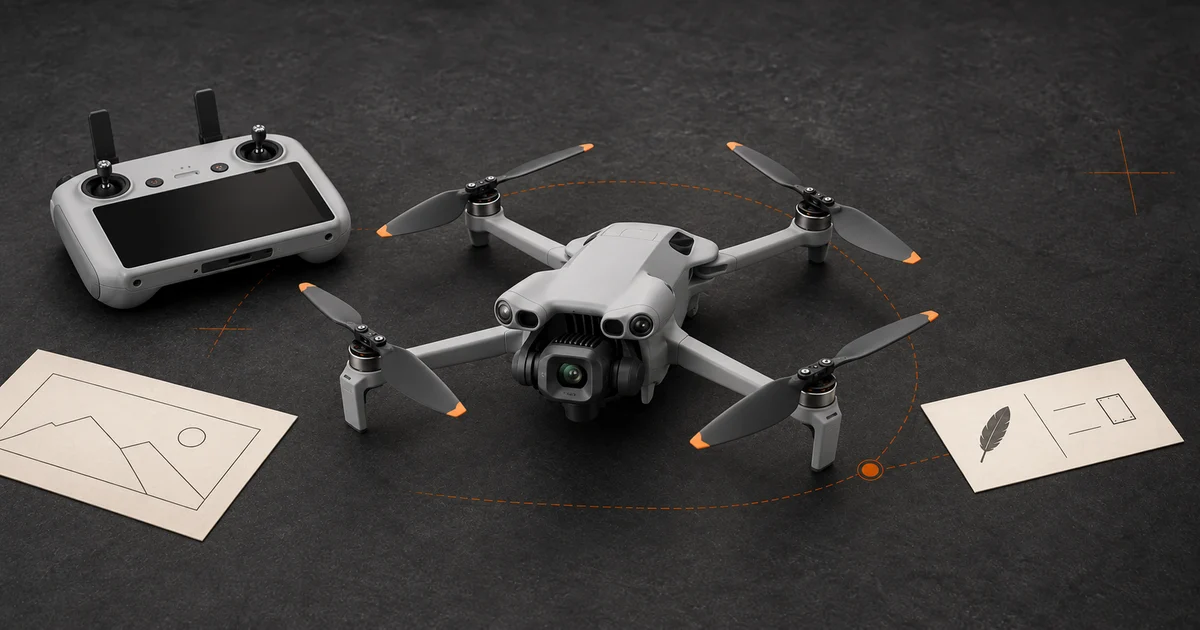
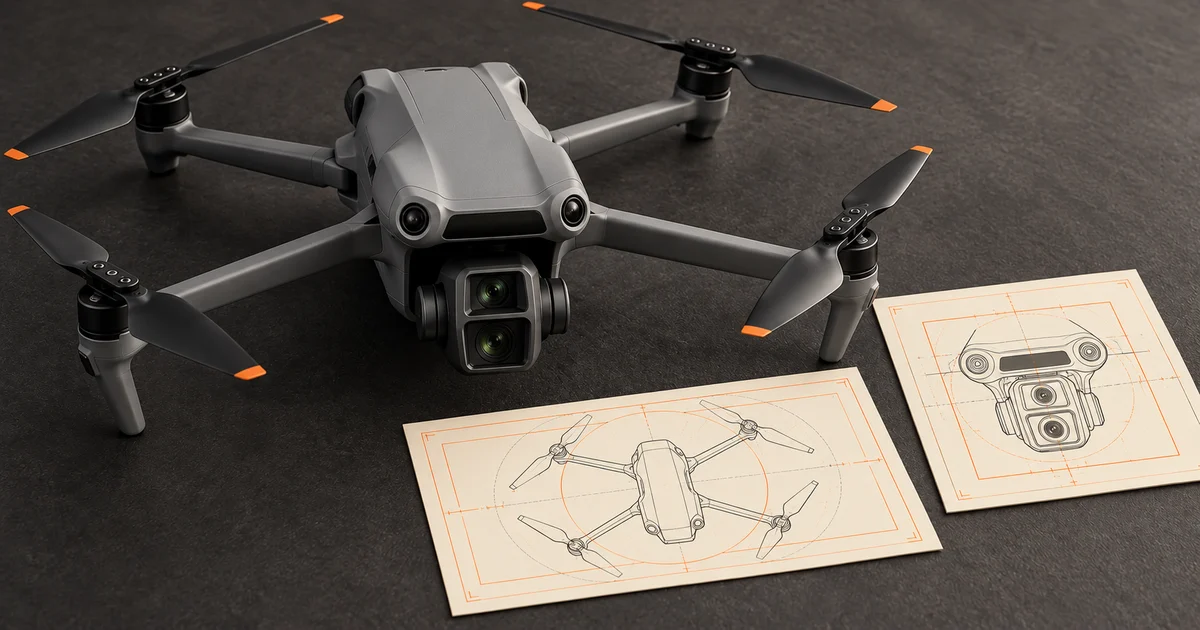
These illustrations are not seller listings. Links open exact-model searches, not verified offers. Exclude aircraft-only, damaged and accessory results; check the controller, battery, regional version, returns and support before buying. Stock and prices change.
Camera decision
Buy the Air for a shot, not a sensor label
Both use a 1-inch main sensor, so do not assume the Air 3S automatically produces better wide-angle footage. Exposure, light and your editing workflow still matter.
The Air's separate telephoto camera is the clearer difference. Use the wide view to establish a valley, then the tighter view to isolate a ridge, building or distant feature from your chosen flying position. A crop can change framing on the Mini; it does not add a second camera. Moving closer also changes viewpoint and may be inappropriate for the location.
TechRadar's Air 3S flight review found the tele camera useful for varied compositions and observed that digital zoom softened footage. Buy the Air when that extra framing option appears in your real shot list.
The Air's two sensors and lenses are different. Do not assume equal low-light output or perfectly matched clips just because both record 4K. For a film built mostly from wide evening scenes, inspect independent samples and compare the full kits before choosing by aircraft size. Our Air 3S review explains its camera and digital-zoom limits.
Portrait workflow
Mini makes vertical capture the main job
The Mini rotates its gimbal for true vertical shooting. The Air provides 2.7k/60fps vertical output from either camera; no rotating portrait gimbal. It can make portrait clips, but the workflow differs from turning the camera to use a portrait frame. If every trip must deliver vertical posts as well as a horizontal film, that difference is a reason to choose the Mini.
For occasional social clips, the Air's output may be sufficient. Check your delivery resolution and how much composition you need to preserve. The Mini is the better fit when portrait framing drives the shoot; the Air is easier to justify when the telephoto view drives the shoot and portrait delivery is secondary.
Our Mini 5 Pro review covers the rotating gimbal and the limits of a single-camera system. Neither gimbal motion nor a high frame rate replaces a useful subject and controlled camera movement.
Travel and flight time
Compare the bag you will actually carry
The aircraft-weight difference in the table is substantial. The bag also includes a controller, spare batteries, charging equipment and protection for the gimbal. Lay out those items before buying. The Mini is our default for walking trips where packing less makes you more likely to bring a drone; the Air needs a recurring camera benefit to earn its space.
The standard-battery flight-time claims favor the Air. Use that as planning context, not as a promise of nine extra minutes of filming. Different flight conditions and test setups prevent a precise usable-time comparison. Leave a return reserve and compare how many charged batteries your kit includes.
Tom's Guide's Mini 5 Pro test reported stable footage in windy conditions, while recommending a heavier drone for more exposed coastal use. Treat wind and gusts as a flight-day decision: neither aircraft makes poor weather safe.
The mini-drone guide looks at carrying the full setup. If a trip includes aircraft travel, check the battery travel guidance and your airline's current rules for the exact batteries.
Flight assistance
Neither is a hands-off camera
Both offer subject tracking and multidirectional sensing with forward LiDAR. Those shared features make this a camera-and-carry decision rather than a simple “one has obstacle avoidance” contest. Firmware, mode, lighting, surfaces and the planned route still determine what assistance is available.
Thin wires, branches and reflective water deserve particular care. Keep the aircraft in sight, practice tracking in clear space and check the return route before relying on flight assistance.
The newer transmission label on the Mini does not establish a better link on your route. Interference and obstacles matter, and maximum radio reach is not a lawful flight distance. See our Return to Home guide before relying on automation.
Choose by your next ten flights
Which earns a place in your kit?
Choose Mini 5 Pro if…
- Walking and travel favor the smaller carry kit.
- True vertical framing is a frequent deliverable.
- Most of your planned shots use a wide view.
- You accept a single camera and have verified seller support.
Skip it when a separate telephoto camera is a recurring need, or when you are buying mainly on an assumed registration exemption.
Choose Air 3S if…
- You regularly switch between wide and tighter compositions.
- The second camera saves a shot you otherwise cannot frame well.
- You will carry the larger aircraft and batteries.
- Portrait output is secondary to your two-camera workflow.
Skip it when the tele camera would be an occasional novelty or the larger kit will stay at home.
For an owner of a capable drone, write down the limitation before upgrading. If the problem is composition, exposure or flying confidence, changing aircraft may leave it unchanged. If budget is the main constraint, the Mini 4K vs Mini 5 Pro comparison addresses a different decision.
Before checkout
US stock, support and the real total
On October 2, 2026, the DJI US Store Air 3S page showed its RC-N3 and Fly More Combo Lite RC 2 options as Out of Stock. We could not confirm direct official US Mini 5 Pro stock from DJI's US Store. Its verified UK package page does not establish US availability. Neither observation describes every third-party seller.
Do not buy on a launch-price comparison or the cheapest aircraft-only result. Compare the same controller type, usable batteries, charger, storage, condition and shipping. A phone controller also requires your compatible phone. A screen-controller illustration on this page does not promise one in the listing.
- Exact kit: confirm model, included controller and battery version. Do not assume batteries interchange between these aircraft.
- Support: ask who handles a repair, where it goes and what written coverage applies. DJI's after-sales policy ties warranty service to the purchase service region; an imported listing is not proof of US coverage.
- Flying weight and rules: Air 3S needs US recreational registration at its published weight. The Mini sits close to the threshold, so check the actual battery and accessories. FAA guidance requires registration for recreational drones at 250 g or more, and TRUST for recreational pilots. See our registration guide for the recreational and Part 107 distinction.
If support terms are unclear, postpone purchase. A camera advantage is only useful if the kit is suitable for your flights and you can live with its repair path.
Common questions
Before you choose
Is Air 3S always better for image quality?
No blanket winner is supported here. Both have a 1-inch main camera. The Air's clearer advantage is a separate telephoto camera, while the Mini offers true vertical capture. We have not run a matched image-quality test.
Can Air 3S shoot vertical video?
Yes. DJI specifies 2.7K/60fps vertical output from both cameras. Its gimbal does not rotate into portrait orientation like the Mini's.
Can Mini 5 Pro replace the Air's telephoto camera?
It can crop for a tighter frame, but that does not give it a separate telephoto camera. Choose by your recurring compositions and delivery needs.
Which is better for travel?
Mini 5 Pro is our default when carrying less and capturing portrait video are priorities. Air 3S is worth the larger kit when you regularly use the second camera. Count the whole bag, not just the aircraft.
Does Mini 5 Pro avoid FAA registration?
Do not assume it. Check actual ready-to-fly weight and your operating category. Battery choice and accessories matter, and the recreational exception is not the Part 107 rule.
Should I upgrade from Mini 5 Pro to Air 3S?
Only when the second camera solves a repeated limitation and you accept the larger kit. For wide shots or portrait-first work, this can be a change of workflow rather than a clear upgrade.
Sources and methodology
Evidence behind the decision
Researched and compared by DroneReviewed Editorial; sources checked October 2, 2026. Specifications are rendered from the shared Product Research records. Recommendations are our editorial interpretation. We do not claim ownership, original flights, camera samples or measured comparative scores.
- DJI Mini 5 Pro product page (UK) (DJI; checked 2026-10-02)
- DJI Mini 5 Pro user manual (DJI; checked 2026-10-02)
- DJI Air 3S specifications (DJI; checked 2026-10-02)
- DJI Air 3S FAQ (DJI; checked 2026-10-02)
- DJI Air 3S US Store packages (DJI; checked 2026-10-02)
- DJI Mini 5 Pro review: A new gold standard for mini drones (Tom's Guide; checked 2026-10-02)
- DJI Air 3S review: soaring closer to camera-drone perfection (TechRadar; checked 2026-10-02)
- DJI after-sales policy (checked October 2, 2026)
- FAA recreational flyer guidance (checked October 2, 2026)
- DroneReviewed editorial methodology
Independent observations above belong to the named reviewers. Separate reviews are not a controlled head-to-head test: they do not establish a measured wind, crash-prevention or tracking-reliability winner. The standard-battery table avoids mixing the Mini's optional larger-battery claim with the Air's standard kit. The displayed approximate Mini weight is rounded from the shared 249.9 g record; DJI's UK comparison panel uses 249 g, and actual configuration still matters. Direct-store stock and seller support require a fresh check before purchase; this comparison has a 30-day review cadence.